Taking up Maritime Security Challenges and Stakes : A European Governance Mechanism ?
While the European Union (EU) benefits today from a large regulatory acquis and from a vast experience in maritime operations and programmes, efforts must go on with regard to coordination and consistency to overcome sectoral divisions and increase efficiency. Taking up challenges and stakes in the maritime domain requires to implement concretely the integration principles and the comprehensive approach, by coordinating the use of both civilian and military resources and capabilities available to the EU.
Whereas the EU presents itself as a maritime security provider and a global actor on the international stage, safeguarding its interests, its credibility and its influence demands to review the organisation and methodology approach to address in a coordinated manner the risks and threats facing European waters and, further beyond, the close and remote maritime neighbourhoods. An initiative aiming at establishing an inter-institutional mechanism for maritime governance at strategic level opens up prospects in this direction.
Version originale en français, J-M Lhuissier, Enjeux et défis maritimes : quelle gouvernance européenne ?
Maritime Security : Today’s Critical News
Russia’s aggression against Ukraine, its consequences in the Black Sea and the Baltic, the hybrid warfare at sea, as well as the circumvention of sanctions by the Russian shadow fleet and the Houthi attacks in the Red Sea, are once again bringing the issue of European maritime security and safety to the forefront. More broadly on the world stage, the security of maritime spaces and sea lines of communication, which remains crucial for EU economies, is regularly called into question while all illegal activities taking place at sea, and transiting by sea, continue to challenge European societies and cause human tragedies.
The European Maritime Spaces
The European maritime spaces are characterised by four seas – the Mediterranean, the Baltic, the North Sea and the Black Sea, and by two oceans – the Atlantic and the Arctic. The EU is also present, through its outermost regions, in the Caribbean Sea and in the Indian and Pacific Oceans.
It can also be pointed out that the EU 27 is geographically connected to the global network of shipping routes since the bloc consists of 22 (coastal) Member States with access to the sea [1] while, to the North and West, Norway and Iceland are partners of the EU within the European Economic Area (EEA).
The European Maritime Factor : Strengths and Vulnerabilities
Due to its global geographical reach with economic, environmental and security ramifications, the "maritime factor" [2] shares a key strategic dimension for the EU. Characterised by the institutional acquis that combines the corpus of normative "soft power" and the instruments of "hard power" wielded by Member States, the European maritime factor participates in the foundations of EU power.
This factor is characterised by both major strengths [3] and multiple vulnerabilities [4] linked to globalisation and environmental challenges. From the policy of "fait accompli" to the interweaving of hybrid risks and threats, economic and power dynamics have transformed the maritime domain into a space rife with rivalries and contestation.
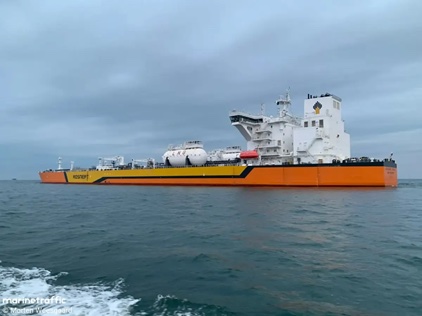
Depending on energy and raw material imports and relying on globalised commerce, European economies are largely dependent on maritime transport, port activity and the viability of strategic sea lines of communication [5]. The EU’s economic and commercial security requires safe and secure infrastructure [6] and spaces. The imperatives of sustainability in maritime activities and the blue economy [7] demand jointly practices that guarantee the preservation of ocean resources, the marine environment, and the climate ; while safeguarding human life at sea remains a legal requirement in all circumstances [8].
Protecting logistics flows and underwater cables, the access to natural resources and common spaces, as well as freedom of navigation in accordance with international law, in particular the United Nations Convention on the Law of the Sea (UNCLOS, 1982), constitute strategic priorities for the EU.
The Challenges of Maritime Geopolitics
Europe’s strengths and vulnerabilities in the maritime domain lie at the crossroads of geopolitical and security issues that challenge the EU’s autonomy and sovereignty and its ability to safeguard its interests.
Disputes over access to common maritime spaces, the unlawful appropriation of areas subject to sovereign rights, and insecurity linked to terrorism, piracy, and armed robbery [9] have arisen in many regions of the world. At the same time, drug trafficking, which feeds criminal activities, has become globalised, making extensive use of maritime pathways ; while attacks on underwater cables and cybercrime targeting the maritime industry have appeared.
Recently, Russia has set up a "shadow fleet" [10] to export its crude oil and refined petroleum products, and to fund the war in Ukraine while circumventing European and international sanctions imposed in June 2022.
Furthermore, the consequences of climate change continue to fuel rivalries and tensions and raise threats to regional stability and the security of maritime spaces.
In the landscape of intertwined strengths and vulnerabilities that characterises the European maritime domain, safety and security are at the forefront since safeguarding its interests [11] and enforcing its maritime policies, including sanctions and possibly observing maritime ceasefires, requires the EU to master maritime awareness of activities [12] taking place not only in the close maritime neighbourhoods but also further [13]. The Houthi attacks in the Red Sea and the monitoring of the Russian shadow fleet operating worldwide illustrate this imperative.
The European Maritime Acquis
The EU has made significant progress in the domain of maritime safety and security over the past fifteen years. This has resulted in a diverse portfolio comprising a wide range of assets including, on the one hand, policies, general and regional strategies [14], directives, regulations and Council conclusions, and on the other hand, Agencies and Centres/Cell [15] in association with the capabilities of Member States (coastguard services, navies).
This civilian and military capital also includes an extensive experience in running operations and missions under CFSP and CSDP [16], operations under FSJ-JHA [17], Commission-funded programmes (regional development, capacity building, IOG [18]) and diplomacy (EU delegations, high representatives and special envoys, ship calls, etc.).
Within the methodological and regulatory framework, the Integrated Approach [19] (IA) and the Integrated Maritime Policy (IMP, comprehensive approach) offer an advantage since they are conceptually suited to maritime activities, which are by nature multifaceted and interdependent. Based on the principle of cross-sectoral coordination [20], the IA and IMP aim to develop synergies and improve consistency between EU civilian and military activities to enhance efficiency and security. The main objective is to address the maritime domain in its entirety by leveraging the European regulatory and capability potential, and optimising its implementation.
However, the IA and the IMP do not address the structures and coordination mechanisms that would be necessary to achieve the integration objectives. As a key tool in the field of safety and security, the EU Maritime Security Strategy (EU MSS), revised in 2023 [21], is based on the IA and the IMP.
Go Beyond the Functional Limitations of the Acquis
The European maritime acquis consists today of a composite assembly of sectoral and regional programmes and activities implemented, occasionally in the urgency of a contingent crisis, without formal coordination or cooperation between internal and external security, or between civilian and military activities. The silo approach by service [22] and activity, resulting in unnecessary duplication, even within the same basin and theatre of operation, remains the standard practice, excepting several initiatives with unbalanced achievements [23].
The lack of high-level inter-institutional coordination mechanism hinders the application of integration principles and thwarts the deployment of the full range of assets represented by the EU’s civilian and military resources and capabilities. This finding is accompanied by relatively modest European records in maritime issues vis-à-vis the strategic objectives, budgets allocated, and efforts deployed.
Since its interests, credibility and ability to influence are at stake, the EU cannot remain unconcerned by this situation.
Implement the Integrating Principles : European Maritime Governance
The growing consensus regarding the EU’s ability to act sovereignly, its expertise in regional cooperation and capacity building, as well as its experience in conducting operations, legitimise the launch of a maritime governance initiative to address the current coordination deficit.
Under the aegis of the ongoing debate on power and future preparedness, this initiative would have the following objectives : (1) to adapt the European response to actual and future maritime stakes and challenges by addressing comprehensively the multi-sectoral and trans-regional nature of maritime activities and ‘’make best use of the entire EU toolbox, including civilian and military policies, tools and instruments’’ [24] ; and (2) to ‘’ensure the unity, consistency and effectiveness of action by the Union’’ in application of the provisions of Article 26(2) of the Treaty on EU (TEU) [25].
European maritime governance (EMG) should combine at high level : (1) the EU’s objectives of autonomy in decision-making and action to ensure its security and the safeguarding of its strategic interests ; (2) the ambition to act as a global actor contributing to increasing regional maritime security and protecting the marine environment in a multilateral framework in cooperation with partners ; and (3) the establishment of a coordination mechanism at the level of the Secretary Generals of the Commission and the European External Action Service (EEAS) supported by a Secretariat, and an instrument for the joint management of maritime information, at strategic level, supported by monitoring, early warning, anticipation and strategic analysis capabilities in connection with worldwide maritime information fusion centres (IFC [26]).
European maritime information systems with a global focus (CISE, MARSUR, EMSA Integrated Maritime Services including COPERNICUS Maritime Surveillance, etc.) or a regional focus (YARIS in the Gulf of Guinea, IORIS in the Indo-Pacific) represent in this respect pioneering instruments that it would be key to federate and rationalise within the framework of EMG.
European Maritime Governance : How ?
The initiative on European Maritime Governance (EMG) would aim to devise a modus operandi for institutionalising the implementation of the Integrated Approach (IA) through formal structures (e.g. High-Level Steering Committee, Executive Committee, etc.) for coordinating and aligning policies, strategies, budgets (e.g. FPI, NDCI, EPF, EMFAF, etc.), programmes, and operational activities related to the maritime domain. The project would focus on establishing a governance mechanism enabling a functional integrated and coordinated approach to the maritime domain by the Commission services and EEAS.
EMG should involve the Group for External Coordination [27] (EXCO), the Working Party on maritime issues (horizontal issues on IMP and EUMSS) and the Political-Military Group (PMG) by associating the EU Senior Coordinator (with reference to the Coordinated Maritime Presences-CMP) and by reporting periodically to the Political and Security Committee (PSC) and the EU Military Committee (EUMC).
A Task Force (TF) could be established to launch the EMG. It would be co-led by the Commission and EEAS, with a mandate to propose a roadmap for designing a mechanism and operating procedures, building on the acquis, and to prepare a Council decision inviting the Commission and EEAS to submit proposals on governance and an Integrated Maritime Security Architecture (IMSA). The EU Global Gateway programme [28] co-managed by the Council, the Commission, and EEAS, as well as, in the transport sector, the Military Mobility Programme [29], which combines military and civilian aspects, could guide the work of the TF dedicated to EMG.
Short Term Initiatives
In parallel, the implementation of the EU’s strategic approach to the Black Sea region (June 2025) [30] could offer an opportunity to experiment an inter-institutional governance methodology through a pilot project specifically dedicated to setting up the Black Sea Maritime Security Hub [31] (Flagship 1). This governance pilot, involving the various stakeholders, including EEAS, DG MARE, DG HOME, DG MOVE, DG ENEST (cf. Black and Caspian Sea II programme) and DG FISMA (sanctions against the Russian shadow fleet), would be expected to expand to other European basins and EU maritime areas of interest (MAIs).
The application of the sanctions regime against the Russian shadow fleet (EEAS, DG FISMA) suggests also the joint contribution of : (1) maritime operations conducted under CSDP [32] ; and (2) operations coordinated by FRONTEX [33], to strengthen the surveillance, collection and fusion of information relating to listed vessels. The worldwide deployments of the Russian shadow fleet in a context of sanctions confirm, as previously mentioned, the need for the EU to make use of standing monitoring, maritime information, and analysis capabilities. In this regard, the technical arrangements that could be set up for information management, as well as the satellite surveillance tools used within the framework of the sanctions, could foreshow the foundations of a European system of strategic maritime monitoring capabilities to be developed under EMG.
Copyright December 2025-Lhuissier/Diploweb.com
Version originale en français, J-M Lhuissier, Enjeux et défis maritimes : quelle gouvernance européenne ?
EU Maritime Security Strategy (EUMSS)
JOIN(2023) 8 final of 10.3.2023
Council conclusions on the Revised EUMSS, 14280/23 of 24.10.2023
The updated EUMSS will be implemented via an Action Plan (in annex) and in the framework of the Integrated Approach. To implement the strategy, together with its Member States, the EU will use all relevant civilian and military policies, tools and instruments, and coordinate policies and activities of all relevant players at European, regional and national level, strengthening their synergies and complementarities. The strategy will also promote a more coherent engagement of the EU in external conflicts and crises, to enhance the security of the EU and its citizens.
Rear Admiral Jean-Marie Lhuissier has served for 35 years in the French Navy where he has commanded four surface ships and assumed various central staff positions in Paris (EMM, EMA), London (MoD, PJHQ) and Naples (NATO JFC).
He graduated from Ecole Navale (EN 1971, Brest), Ecole Supérieure de Guerre Navale (ESGN 1989, Paris) and Royal College of Defence Studies (RCDS 1997, London).
Having worked in the private sector and cooperated with European institutions in Brussels within multiple projects, he is now an independent consultant and expert in the domain of European maritime policies (Integrated Maritime Policy, EU Maritime Security Strategy, CISE Maritime, etc.).
[1] The EU has more than 1200 commercial ports and 90% of its foreign trade is carried out by sea.
[2] A set : (1) of geographical, socio-economic (blue economy and energy) and environmental components ; and (2) of multi-sectoral activities that define the European fundamentals relating to oceans, seas, and coastlines, and characterise the maritime identity of the European continent.
[3] The geographical location of the European peninsula is a strategic asset. The use of maritime pathways and seaports allows for intra-European commercial exchanges and Europe interactions with worldwide regions. Allowing access on a wide scale to extra-European energy and raw materials, the geographical accessibility to global maritime spaces and maritime transport are critical assets for European economies and strategic autonomy.
Assets include also abundant bio-marine and food resources, where fishery products are among the most prominent, and a huge potential regarding sustainable marine energy and aquaculture.
[4] Illegal and criminal activities developing at sea challenge the safety and security of maritime spaces and pose risks and threats to legitimate activities. They also seriously endanger human life at sea. These activities include in particular : migrants smuggling and trafficking in human beings with tragic tolls, trafficking in narcotics, weapons and counterfeit goods, terrorism fuelled by trafficking activities, illegal, unreported and unregulated (IUU) fishing, deliberate and accidental marine pollution (caused in particular by substandard vessels), piracy and armed robbery, cyber-attacks against the shipping industry, ports and ships, attacks against port infrastructure, etc.
The vulnerabilities also concern international straits that could be blocked, underwater pipelines and cables that transport energy and support 95% of global digital data exchanges.
[5] The accidental blockage of the Suez Canal in March 2021 illustrates the critical nature of this factor.
[6] Port terminals, underwater cables, etc.
[7] COM(2021) 240 final of 17.5.2021.
[8] This is where safety and security converge, as maritime operations legally require safeguarding human life at sea and rescue operations.
[9] Resolution A.1025(26) of the International Maritime Organisation (IMO, 2009) refers to armed robbery against ships.
[10] Approximately 70% of Russian oil exports by sea are carried out by the shadow fleet, estimated at around 800 ships.
[11] Freedom of trade and exchanges (more than 80% of world trade by volume is waterborne), access to common maritime spaces, safeguarding of supply chains (energy, raw materials, manufactured products).
[12] Legitimate and illegal activities, as well as illegal activities carried out under the guise of legitimacy.
[13] Besides the activities between maritime basins, European waters constitute a hub for traffic to and from the far ends of the world. The concept of maritime neighbourhood now extends beyond the strict geographical boundaries of Europe, as evidenced by the fact that, for example, only three weeks of sailing on average connect Chinese and European ports. Global shipping routes are now exposed to numerous and diverse risks in areas geographically distant from Europe but close in terms of transit time. This temporal proximity is evidenced by immediate repercussions on supply chains and commercial exchanges, as illustrated by the consequences of the Houthi attacks in the Red Sea.
[14] EU Global Strategy (EUGS), Strategic Compass, Strategic Agenda 2024-2029, etc.
[15] FRONTEX/EBCGA, EMSA, EFCA, EDA (including PESCO), SatCen, IntCen/SIAC, MPCC, CPCC, JSCC (civilian/military Joint Support Coordination Cell within EEAS), MAICC, MAOC (Narcotics) (an initiative by 8 EU Member States and the UK, co-funded by the EU Internal Security Fund), etc.
[16] EUNAVFOR ATALANTA, Med IRINI, ASPIDES, EUCAP/EUTM Somalia, EUBAM Libya, CMP GoG, CMP NWIO.
[17] Freedom, Security, and Justice/Justice and Home Affairs”, joint operations coordinated by FRONTEX : Themis, Poseidon, Indalo, Minerva, etc.
[18] International Ocean Governance.
[19] The ‘integrated approach to external conflicts and crises’ draws from the 2016 EU Global Strategy. It was endorsed by the 2018 Council conclusions on the Integrated Approach to External Conflicts and Crises (5413/18). It identifies a framework for a more coherent and holistic engagement by the EU to external conflicts and crises and promotes human security and thereby also increases the security of the EU and its citizens.
[20] Border control, fisheries, customs, marine environment, safety and rescue, defence, regional development, law enforcement at sea, etc.
[21] JOIN(2023) 8 final of 10.3.2023.
[22] DG MARE, DG HOME, DG MOVE, DG INTPA, DG ENEST, DG MENA, FPI, SEAE (SECDEFPOL), etc.
[23] Measures to promote operational cooperation between the three EU maritime agencies (FRONTEX/EBCGA, EMSA, EFCA) have been taken within the framework of the European cooperation on coast guard functions. These measures concern primarily multipurpose maritime operations focused on coordinating multi-sectoral civilian activities.
The Coordinated Maritime Presences (CMP) in the Gulf of Guinea (GoG) and Northwest Indian Ocean (NWIO), under the leadership of the EU Senior Coordinator, represent initiatives designed to enhance the effectiveness of civilian-military cooperation within the framework of the Integrated Approach (IA). However, the lack of inter-institutional coordination structures hinders the coordinator in carrying out his/her mandate.
Ad hoc arrangements also exist, on the one hand, between FRONTEX and EUNAVFOR Med IRINI in the Mediterranean, and, on the other hand, between EUNAVFOR ATALANTA and the Regional Maritime Information Fusion Centre (RMIFC/Madagascar) and the Regional Coordination Operations Centre (RCOC/Seychelles) in Northwest Indian Ocean.
[24] ‘’The European Council invites the Council to take forward work on an ambitious and actionable Strategic Compass, … and makes best use of the entire EU toolbox, including civilian and military policies, tools and instruments.’’
[25] ‘’The Council and the High Representative of the Union for Foreign Affairs and Security Policy shall ensure the unity, consistency and effectiveness of action by the Union.’’
[26] Information Fusion Centres.
[27] EXCO aims to strengthen coordination between the European Commission and the European External Action Service (EEAS). It plays a central role in aligning the internal and external dimensions of the Commission’s actions.
[28] Doc 13888/1/22 REV 1 of 28.10.2022.
[29] DG DEFIS, DG MOVE (TEN-T), EEAS, EDA.
https://defence-industry-space.ec.europa.eu/eu-defence-industry/military-mobility_en
[30] JOIN(2025) 135 final of 28.5.2025, The EU’s strategic approach to the Black Sea region.
[31] Black Sea Maritime Security Hub : ‘’By end of summer 2025, the Commission and the High Representative will map specific needs and present operational options, including regarding CFSP and CSDP tools and European Maritime Security Strategy’’.
[32] EUNAVFOR ATALANTA, Med IRINI, ASPIDES.
[33] Specifically Themis.
Copyright DIPLOWEB sauf mention contraire
Citation / Quotation
Auteur / Author :
Date de publication / Date of publication : 5 décembre 2025
Titre de l'article / Article title : Taking up Maritime Security Challenges and Stakes : A European Governance Mechanism ?
Chapeau / Header :
While the European Union (EU) benefits today from a large regulatory acquis and from a vast experience in maritime operations and programmes, efforts must go on with regard to coordination and consistency to overcome sectoral divisions and increase efficiency. Taking up challenges and stakes in the maritime domain requires to implement concretely the integration principles and the comprehensive approach, by coordinating the use of both civilian and military resources and capabilities available to the EU.
Whereas the EU presents itself as a maritime security provider and a global actor on the international stage, safeguarding its interests, its credibility and its influence demands to review the organisation and methodology approach to address in a coordinated manner the risks and threats facing European waters and, further beyond, the close and remote maritime neighbourhoods. An initiative aiming at establishing an inter-institutional mechanism for maritime governance at strategic level opens up prospects in this direction.
Adresse internet / URL : https://www.diploweb.com/spip.php?article2760
© Diploweb.com. sauf mention contraire.